
Research and development
Research and development at Celcode
How does Celcode develop formulations?
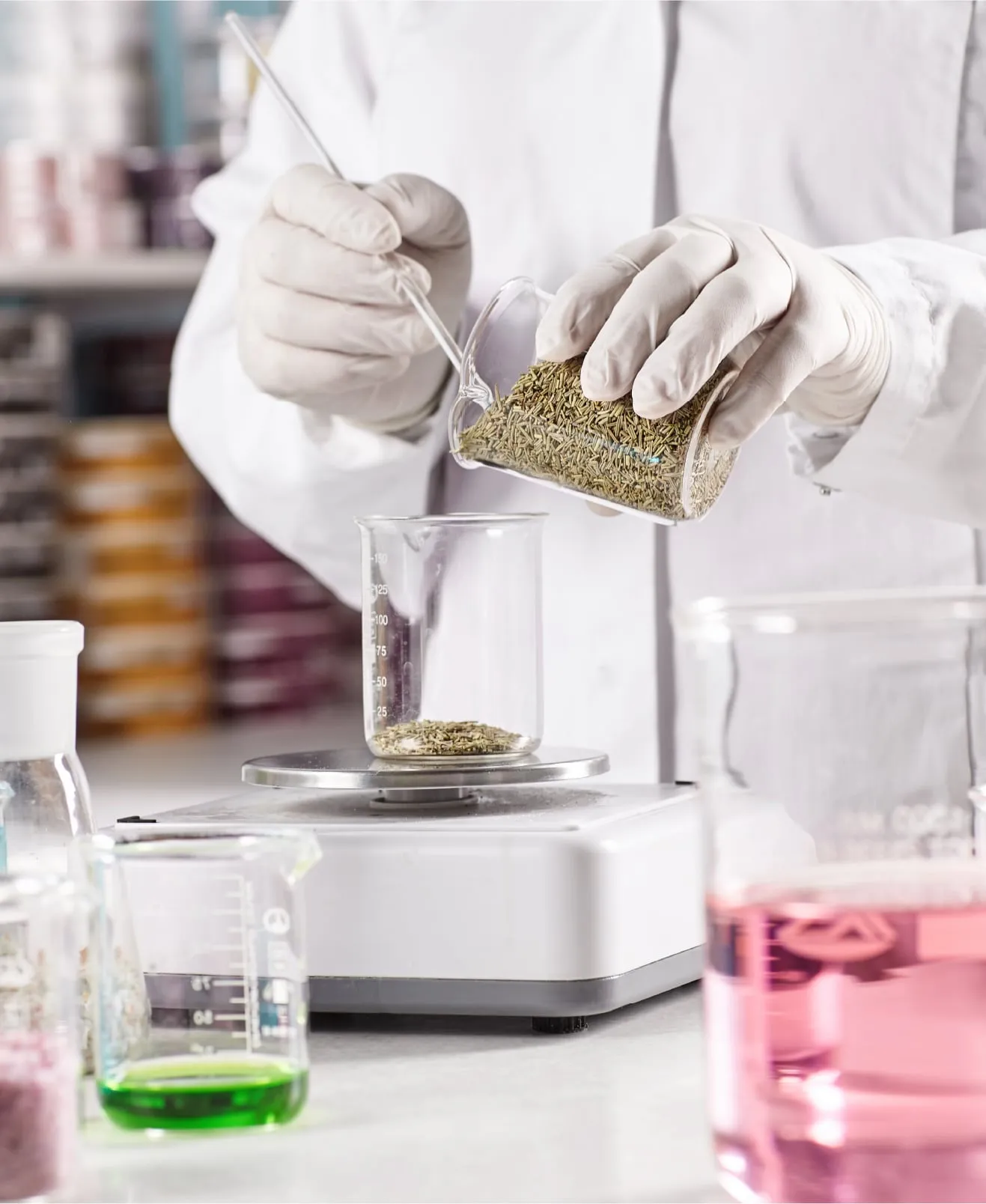
Celcode's research and development is done in-house at its Singapore laboratory. A team of chemists led by a head of R&D develops custom and ready formulations for skincare and haircare, working from an inventory of active ingredients sourced from suppliers worldwide. Every formulation is developed through a documented five-stage process, refined with client samples and checked for stability and regulatory compliance before production.
R&D philosophy
Our laboratory works to one simple goal: the best product outcome for your brand. Four factors guide every formulation decision:
- Efficiency: the formulation delivers its intended function with the right level of actives.
- Penetration: the delivery system carries actives to where they work.
- Absorption: texture and base are chosen for how the product feels and absorbs.
- Uniqueness: the product is distinguishable from what is already on the market.
The team
Formulations are developed by Celcode's in-house chemists under a head of research and development. The team works directly with clients through sampling, so feedback on texture, colour and fragrance goes straight to the person adjusting the formulation. No part of formulation development is outsourced.
Formulation capabilities
We formulate across the main skincare and haircare categories: cleansers and make-up removers, toners and essences, serums and ampoules, creams, emulsions and moisturisers, masks, exfoliators and peels, professional treatment kits, pre- and post-procedure ranges, and shampoos, conditioners and scalp treatments. Products can be built on mousse, lotion, gel, serum or cream bases; the textures and formats page explains how each behaves.
Both routes are available: custom formulation for a product built around your brief, and ready formulations from our range for a faster launch.
Ingredient research and sourcing
We maintain an inventory of active ingredients and source additional materials from suppliers around the world, from Brazil to Russia, as a brief requires. Supplier data on an active is a starting point, not a claim: any efficacy statement that appears on your product is substantiated for that formulation before it is used.
Areas of specialisation
Brightening and uneven tone
Plant-derived brighteners such as Melazap (an Arisaema amurense extract), Mela-glow and tranexamic acid, formulated as alternatives to alpha arbutin and kojic acid.
Read more →Hydration and barrier support
Humectant systems built on hyaluronic acid matrices, polyglutamic acid, Pentamoist, Probio-Col and the resurrection-plant-derived active Hydra Survivor.
Read more →Acne and oil control
Sebum-regulating and anti-comedogenic actives including Alpha Inhibit (a Maclura cochinchinensis extract) and SeboControl 5, designed to work without unbalancing the skin.
Read more →Anti-ageing
Peptide, antioxidant and renewal actives such as Royalactin, V-Tox, EGF complexes, tri-coated retinol and DuoQ Power.
Read more →Vitamin C and antioxidants
Stabilised vitamin C systems including Gluta-C (ascorbic acid with glutathione and gold sub-microparticles) and ethyl ascorbic acid.
Read more →Sensitive skin and pre- and post-procedure care
Low-irritant moisturisers, antioxidant solutions and regenerative products developed for clinics and for sensitive-skin ranges.
Read more →Hair and scalp
Anti-dandruff, anti-hair-loss (including Procapil-based tonics), frizz control, repair and gentle children’s formulations.
Read more →The five-stage formulation process
Define the product USP
We identify the unique selling proposition from your brand story or help you define one, and recommend ingredients for the goal.
Set the business parameters
Budget and price point, active ingredients, stability, texture, fragrance, cost cap and time to market are agreed before formulation starts.
Formulate
The team identifies the base ingredients first, then the hero actives needed for the USP, drawing on our inventory and sourcing where needed.
Test and sample
Formulations are tested and samples delivered for feedback on texture, colour and fragrance. The loop repeats until the benchmark sample is agreed.
Regulatory check
The final formulation is checked against regulatory standards, including stability and shelf life, for Singapore and your target markets.
Testing and regulatory checks
Formulations are tested for stability and shelf life, and samples are refined until the benchmark sample is agreed. Before production, the final formulation is checked against the regulatory requirements of Singapore and your target markets, including the documentation needed for cosmetic product notification. Manufacturing then takes place under the HSA GMP-certified quality system, which covers quality control and release of finished goods. The testing and quality control pages describe the checks in more detail.
Frequently asked questions
Does Celcode develop formulations in-house or outsource them?
Formulations are developed in-house by Celcode’s own chemists at its Singapore laboratory. Ingredients are sourced from suppliers worldwide; the formulation work, sampling and testing happen at Celcode.
Can I bring my own formula or an existing product to be reformulated?
Yes. Existing products can be analysed, reformulated or improved, for example to change texture, remove an ingredient class or meet a new market’s requirements. The same five-stage process applies.
Who owns a custom formulation?
Ownership and exclusivity are agreed in the development contract before work starts. Raise this at the brief stage so the commercial terms are settled early.